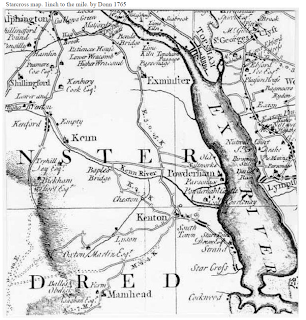
There are photographs and maps of the area. We will discuss other types of material we could collect.
Showing posts with label Roman. Show all posts
Tuesday, 15 May 2018
Cataloguing the Starcross Archive - Wednesday 16th May
Meet on Wednesday evening, 7.30pm at St. Paul's for a first
attempt at sorting out a catalogued archive from the materials we have.
Monday, 14 November 2016
Unearth the history of Starcross
Everyone's invited to another meet in St Paul's Church about the Villages in Action Project Unearth. Kate Green from Villages in Action will lead the discussion. What are our favourite bits of Starcross's History? Will it be our Victorians: George Pycroft, Rear Admiral Francis Godolphin Bond, Brunel or Captain George Peacock? Or will it be aspects of the railway history, such as the Atmospheric Railway, or sending violets to Covent Garden? Will wartime tales be preferred; such as The SS South Coaster and the Home Guard? Could Roman times enthuse everyone? Romans used the River Exe to get to and from Isca (Exeter). What evidence do we have about the Romans in Starcross? Will the history of the River Exe be a focus? Or will it be something else?
Please do come along if you'd like to be involved with this exciting Lottery funded project. The meeting is at 7:30pm on Wednesday 23rd November, in St Paul's.
![]() |
| Captain George Peacock |
| George Peacock's grave in St Paul's church |
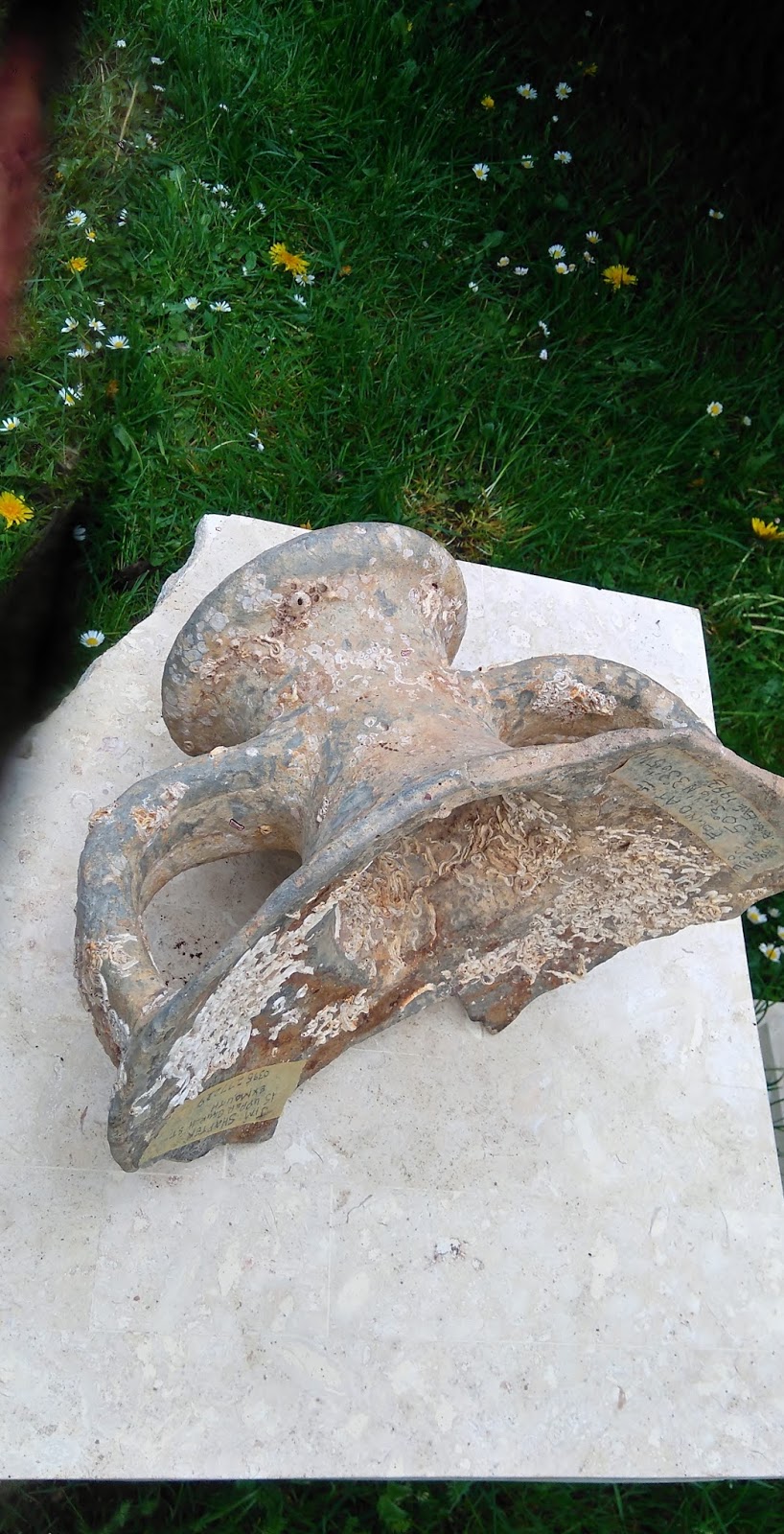
| The late Jim Shapter's Roman amphora | from the mouth of the Exe |
![]() | |
| Mr Isambard Kingdom Brunel (Dave Grylls) | at a Starcross History meet |
| book: Brunel's Atmospheric Railway illus. William Dawson |
![]() |
| Unearth - the Villages in Action project to unearth our history |
| Starcross home Guard |
| Pennyfarthing stamp for Pennyfarthing Cottage on our 2016 history trail |
![]() |
| double header of steam at Cockwood |
Tuesday, 17 May 2016
Roman Amphora from 3 fathoms in the mouth of the Exe
This top of a Roman amphora was one of the Show&Tell items which were loaned to Starcross History for its AGM on May 11th.
The late Jim Shapter reported that it was brought up from approximately 20 foot depth (6 metres. 3 fathoms) in the River Exe Estuary, off Cockwood, in 1991; when divers had gone down to inspect Jim's deep water mooring.
In 1994, the following information was kindly provided by Graham Langman of the Archaelogical Field Unit at the Royal Albert Memorial Museum in Exeter:
"
It is a type called Dressel 20 and is the commonest form found in Roman Britain. It was made in large numbers along the banks of the river Guadalquivir and its tributaries between Seville and Cordoba in the southern Spanish Province of Baetica, and was used to carry the locally-produced olive oil. The span of production of this type covers three centuries and this amphora will date between the mid first century AD and the third century AD.
"
Subscribe to:
Posts (Atom)